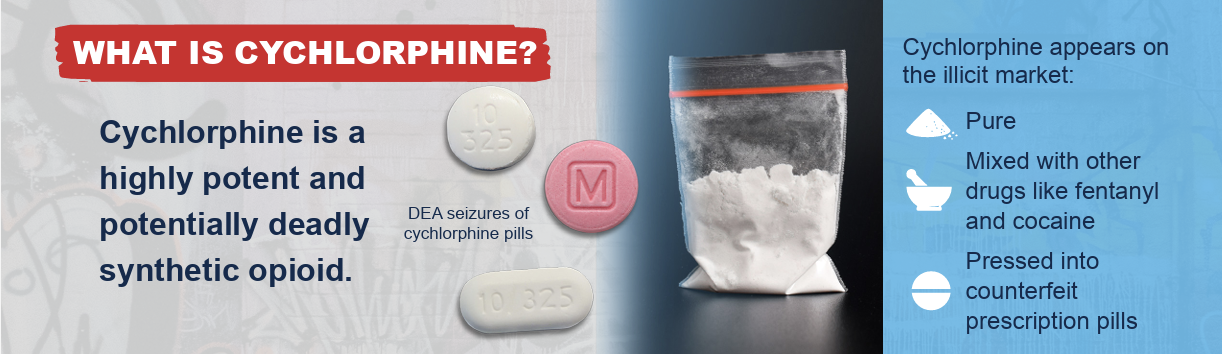
Image: DOJ/DEA
When a new drug makes headlines close to home, it’s natural to wonder what it could mean for your community and those you care about. In April, San Francisco health officials reported a fatal overdose involving cychlorphine, a highly potent opioid that is emerging in street drugs. Concerns about the dangers of cychlorphine in the illicit drug supply prompted the Center for Forensic Science Research and Education (CFSRE) to issue a January 2026 public alert. Cychlorphine has been detected in counterfeit pills and other unregulated drugs in several states, including California. Like fentanyl, someone may be exposed without knowing it. Understanding this emerging risk and knowing how to respond to an overdose can help protect you and the people you care about.
What is cychlorphine?
Cychlorphine, also called N-propionitrile chlorphine, is a laboratory-made opioid. It belongs to a group of synthetic opioids known as “orphines” and is chemically different from fentanyl. It is not approved for medical use in the United States. Like other opioids, it can cause deep sedation and dangerously slow or stopped breathing.
Is cychlorphine more dangerous than fentanyl?
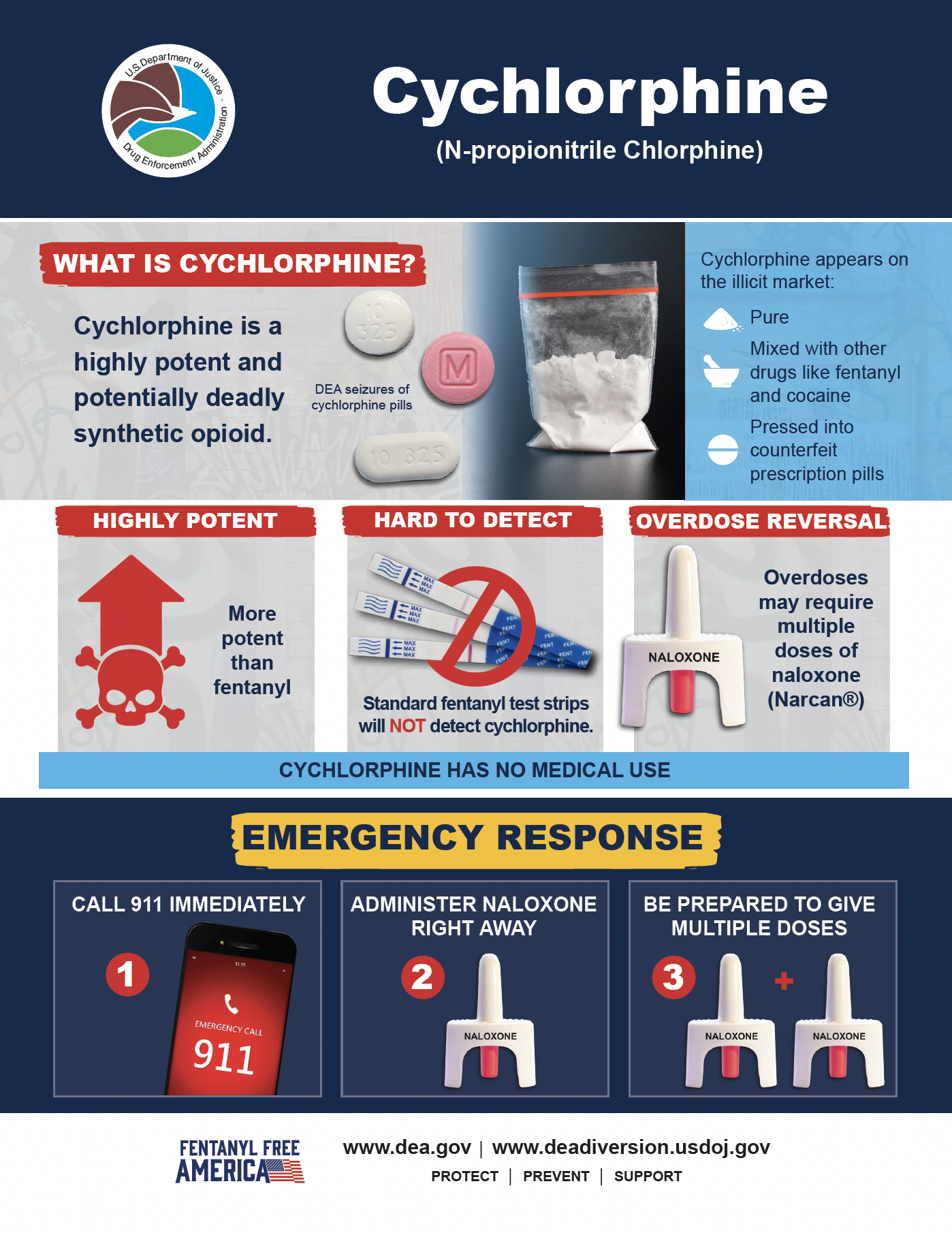
CFSRE reported laboratory findings suggest cychlorphine is approximately 10 times more potent than fentanyl. With the illegal drug landscape constantly changing, and because cychlorphine is relatively new, human evidence about cychlorphine remains limited. A July 2026 medical editorial explains that much of the early pharmacology research studied related opioids, rather than cychlorphine itself. Findings from those studies help identify possible risks, but cannot exactly predict what an overdose may look like in a person.
Why exposure is dangerous
Since 2025, the DEA’s Toxicology Testing Program (DEA TOX) has detected cychlorphine in 63 fatal overdose cases. Cychlorphine has been found on its own and mixed with fentanyl, heroin, cocaine, benzodiazepine, and other substances. The DEA warns that synthetic drugs can be mixed into counterfeit pills or fentanyl powder without the person’s knowledge. Being able to distinguish a fake pill from a genuine prescription pill by sight or smell is highly unlikely, making counterfeit pills extremely dangerous.
The practical concern is serious: a highly potent opioid can suppress breathing at very small doses. And often, different drugs are mixed – or taken – together, making each person’s response to the substances highly unpredictable. In an unregulated street drug supply, people may not know which substances they are taking or how much is present. The absolute safest choice is to avoid any pill that was not prescribed to you by a doctor, even if it was given to you by someone you trust.
Fentanyl test strips cannot detect every opioid
Especially concerning is that fentanyl test strips do not detect cychlorphine. Routine hospital opioid urine screens may also miss it, and specialized laboratory testing may be needed. A negative routine drug screen should not delay treatment when a person shows signs of an opioid overdose. At the same time, a negative fentanyl test does not mean a drug is safe or free of other opioids.
Recognize and respond to an overdose quickly
During an opioid overdose, breathing can become dangerously slow or stop. The person may be unresponsive and unable to wake up, even when you call their name and tap their shoulders. According to the CDC, signs of an overdose may include:
Unconsciousness or inability to awaken
Slow or shallow breathing or difficulty breathing, such as choking sounds or gurgling/snoring noise from a person who cannot be awakened
Discolored skin (especially in nails or lips)
Small, constricted "pinpoint pupils" that don't react to light
Not every person will show every sign. Abnormal breathing or unresponsiveness is enough to act. When in doubt, treat the situation as a possible overdose. Responding is safer than waiting.
If you think someone may be experiencing an opioid overdose, treat it as an emergency and follow these steps, according to the California Department of Public Health:
Give naloxone and call 911.
If needed, provide a second dose of naloxone (using a new naloxone container) after 2-3 minutes.
Keep the person awake and breathing.
If the person is not breathing, you can perform rescue breathing or CPR.
Lay the person on their side to prevent choking.
Stay with the person until 911 responders arrive.
Take steps towards prevention today
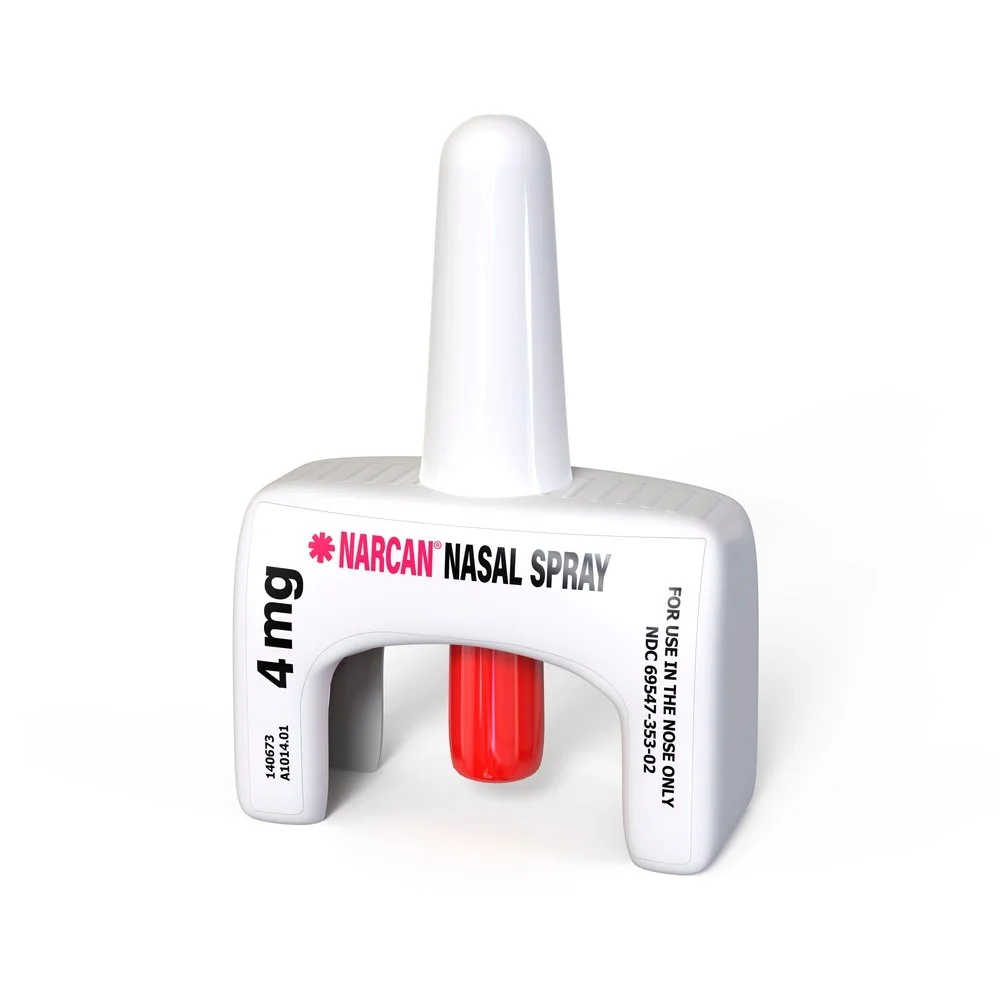
Carry naloxone, keep more than one dose available, and learn how to use it before an emergency. In Sacramento County, you can find free naloxone at community locations and NaloxBoxes, or request it for pickup through the Sacramento County Opioid Coalition. Check the map of free naloxone locations for hours and availability. You can also get naloxone without a prescription at many pharmacies and retailers.
Overdose is preventable, and each of us can be prepared to help save a life. Visit Safer Sacramento’s Narcan page to request naloxone and learn how to use it.
If you or someone you know is struggling with substance use, we are here to help. Please reach out to us at Sacramento County Behavioral Health today. Call 916.875.1055 or visit us at https://dhs.saccounty.gov/us/en/behavioral-health.html.